
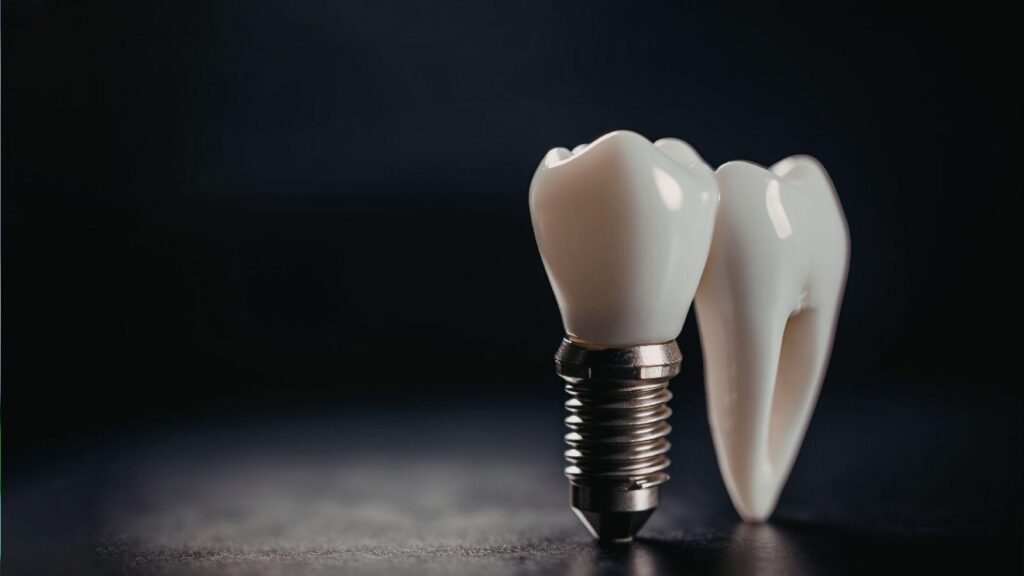
If you want the stability of implants without committing to individual crowns for every tooth, hybrid dentures on implants give you a practical middle ground between removable dentures and fully fixed teeth. They attach a full-arch prosthesis to several implants for a secure, natural-feeling bite that you can’t get from traditional full or partial dentures.
This post will walk through how hybrid prosthetics work, the benefits they deliver—like improved chewing, bone stimulation, and long-term comfort—and the clinical steps and trade-offs to expect so you can judge whether this solution fits your needs.
You’ll also see how hybrids compare with overdentures and all-on-x fixed bridges, so you can weigh durability, maintenance, cost, and clinical suitability before discussing options with your dentist.
Core Functionality and Structure
Hybrid dentures combine a full-arch prosthesis with implant anchors to restore chewing, speech, and facial support. They use a rigid substructure and prosthetic teeth to deliver stability and predictable occlusion.
What Defines Hybrid Dentures
A hybrid denture is a fixed full-arch prosthesis that you cannot remove daily. It replaces an entire upper or lower dental arch and attaches to multiple dental implants, typically 4–6 per arch.
You get a single-piece prosthesis that includes an acrylic or composite gingival portion and prosthetic teeth set on a metal substructure. The fit is rigid against the implants, so the prosthesis resists rotation and vertical movement during function.
Key functional goals are to restore occlusion, distribute bite forces across implants, and reestablish lip and cheek support. Unlike removable overdentures, hybrids are intended as a long-term, non-removable solution once placed and adjusted.
How Implant Support Works
Implants act as the foundation by transferring chewing forces into the jawbone. Each implant is a titanium (or titanium-alloy) post that osseointegrates with bone; the prosthesis then secures to multi-unit abutments or titanium bars.
You usually see 4–6 implants per arch; fewer implants increase load per implant, while more implants improve force distribution. Attachment methods include screw-retained connections and, less commonly, cemented interfaces; screw retention allows retrievability for repairs and hygiene access.
Immediate-load protocols can place a provisional hybrid soon after implant insertion when primary stability is adequate. Final prosthetic torque, occlusal adjustment, and balanced contacts are critical to avoid overload and prolong implant longevity.
Materials and Design Features
The typical hybrid combines a metal framework (titanium or cobalt-chrome) with an acrylic or high-impact resin gingival base and acrylic or composite teeth. You can also choose zirconia-based hybrids for improved wear resistance and esthetics, though they are heavier and less forgiving.
Design features focus on strength, retrievability, and hygiene. The metal substructure resists flexure; screw channels provide access for removal; and polished gingival contours minimize plaque traps. Tooth arrangement and occlusal scheme aim to balance forces—monoplane or lingualized occlusion reduces lateral loads.
Maintenance considerations include accessible screw channels, provision for relines or repairs to acrylic teeth, and material choices that balance esthetics, wear resistance, and ease of adjustment.
Key Benefits of Hybrid Prosthetics
You get a fixed full-arch solution that improves stability, appearance, and oral function compared with traditional removable dentures. The next points explain how hybrid prosthetics deliver those practical advantages.
Stability Compared to Removable Dentures
Hybrid prosthetics anchor to typically 4–6 titanium implants placed in your jawbone, so the prosthetic bridge stays firmly attached rather than resting on gums. That attachment prevents the slipping, rocking, and adhesive dependence that often occur with conventional removable dentures.
You also gain better force distribution. Chewing loads transfer through the implants to bone, which reduces sore spots and helps preserve jawbone volume over time. Maintenance still requires hygiene around the implant posts, but you won’t need daily removal for cleaning unless your dentist designs a removable overdenture.
Aesthetics and Natural Feel
Hybrid prosthetics use a custom-made prosthetic arch with teeth matched to your facial proportions, tooth shade, and bite plane. The result looks more like natural teeth than standard dentures because the teeth and gum contours are fabricated to follow your anatomy rather than generic denture molds.
Materials such as acrylic, composite, or porcelain on a titanium or zirconia framework let your clinician balance appearance and durability. Because the prosthesis is fixed and stable, it reduces the unnatural movement or gaps that can expose denture base edges and compromise your smile’s natural look.
Speech and Bite Functionality
Because the prosthesis remains fixed, you avoid the common speech distortions caused by denture shifting or bulky acrylic flanges. Consonants and sibilants (like “s” and “t”) usually become clearer once the prosthetic arch is correctly aligned and you adapt to the new bite.
Bite force with hybrid prosthetics is significantly higher than with removable dentures, so you can chew firmer foods—meat, raw vegetables, and apples—more confidently. That improved function supports better nutrition and reduces compensatory chewing patterns that can strain remaining natural teeth or the temporomandibular joint.
Considerations and Procedure Overview
You’ll evaluate candidacy, undergo staged surgery and prosthetic fittings, and commit to specific daily and professional care. Expect a multi-visit timeline, scans and impressions, and lifelong maintenance to protect implants and the prosthesis.
Eligibility and Candidacy
You qualify if you have significant tooth loss in one arch and enough jawbone volume for implant support or can tolerate bone grafting. Your dental history, current oral health, and systemic conditions — diabetes control, smoking status, or osteoporosis treatments — affect candidacy.
Your clinician will order a CBCT scan and intraoral photos to measure bone height, width, and density. These images guide how many implants (commonly 4–6) you’ll need and whether sinus lifts or grafts are necessary.
You should be committed to oral hygiene and regular dental visits; uncontrolled periodontal disease or heavy smoking raises failure risk. Discuss medications like bisphosphonates or immunosuppressants that may change treatment planning.
Surgical and Fitting Process
The process usually starts with diagnostic planning: digital impressions, CBCT-based implant planning, and a surgical guide. Implants are placed under local anesthesia, often with sedation; you may receive provisional (temporary) hybrid prostheses the same day or after healing, depending on primary stability.
Healing takes 3–6 months for osseointegration in most cases. After integration, your dentist takes final impressions or scans and confirms occlusion, lip support, and esthetics. A metal substructure (framework) is fabricated and layered with acrylic or composite teeth; the prosthesis is then screwed to the implants and adjusted for comfort and function.
Expect follow-up visits for bite adjustments, soft-tissue shaping, and torque checks. Complications like peri-implant mucositis, screw loosening, or acrylic tooth wear can occur and are managed with targeted repairs.
Maintenance Requirements
You must perform daily cleaning around and under the prosthesis using interdental brushes, water flossers, or floss threaded under the bar to remove plaque. Clean the prosthesis surfaces and access holes; your clinician will show specific angles and tools to reach subprosthetic areas.
Schedule professional maintenance every 3–6 months for monitoring, prophylaxis, and to check torque on attachment screws. Radiographs at regular intervals assess crestal bone levels.
Be aware of component wear: acrylic teeth may need replacement every few years, and retained screws or attachments can require tightening or replacement. Promptly report looseness, persistent soreness, or bleeding around implants.
Alternatives and Comparative Perspectives
Hybrid dentures sit between fully removable dentures and fully fixed implant prostheses, offering strength and improved chewing but requiring more maintenance than solid ceramic bridges. You should compare stability, maintenance, cost, and bone support when weighing options.
Removable Versus Fixed Options
You can choose removable implant‑retained overdentures that snap onto 2–4 implants or fixed hybrid prostheses anchored by 4–6 implants. Removable overdentures let you clean under the denture easily and usually cost less up front.
Fixed hybrids deliver greater bite force and feel more like natural teeth because acrylic or porcelain teeth attach to a rigid metal substructure screwed to implants. They do limit access for daily cleaning and often require professional maintenance for worn acrylic teeth or broken teeth.
Consider bone volume and bruxism. If you have limited bone or heavy grinding, a removable overdenture may reduce mechanical stress and simplify repairs. If you prioritize chewing efficiency and long-term bone stimulation, a fixed hybrid or a full-arch fixed ceramic bridge may serve you better.
Factors in Choosing the Right Solution
Your medical history, budget, and aesthetic priorities determine the best path. Diabetes, smoking, or poor healing lowers implant success rates; clinicians may recommend fewer implants with a removable solution to reduce surgical burden.
Budget shapes material choices: acrylic-based hybrid dentures cost less and are easier to repair, while porcelain or zirconia fixed bridges cost more but resist wear longer.
Think about maintenance frequency and long-term costs. Removable options require denture pad and clip replacements; hybrids may need acrylic tooth replacement every few years. Also factor in hygiene: you must be able to access and clean around implants daily; if manual dexterity is limited, choose options that simplify hygiene.