
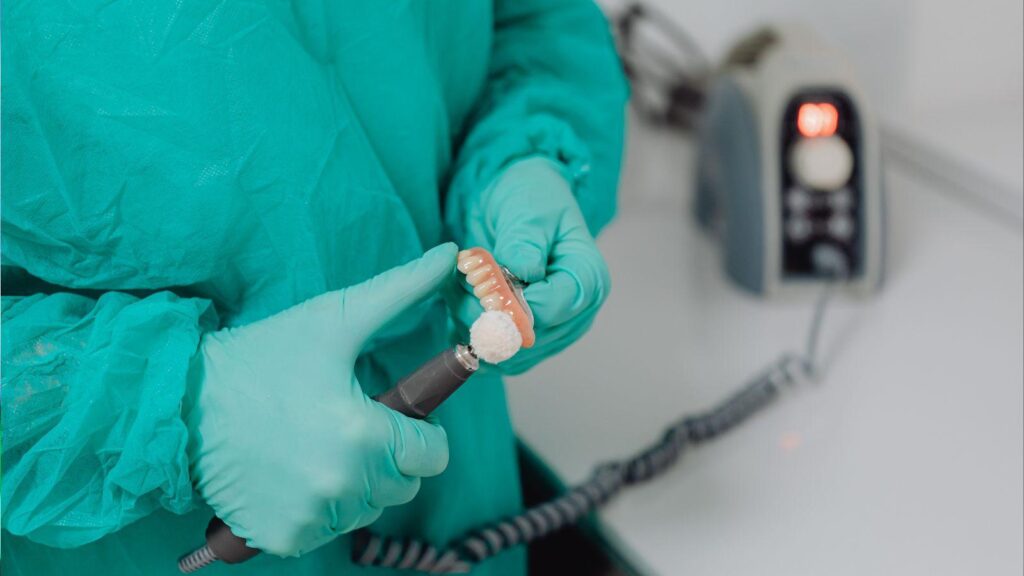
You can often use a single implant to support more than one crown, but whether it will work for you depends on your jawbone, the number and position of missing teeth, and the type of restoration your dentist plans. One implant can commonly anchor two adjacent crowns or form part of an implant-supported bridge, while full-arch solutions use multiple implants to support many teeth — all available through experienced providers of dental implants in Wilmington NC.
You’ll learn how implant-supported crowns, multi-unit bridges, and full-arch systems differ, and what clinical factors — bone quality, bite forces, and spacing — determine the best approach for your mouth. Expect clear guidance on treatment planning, expected outcomes, and when a single implant is sufficient versus when additional implants are safer and more durable.
Implant-Supported Restorations Overview
Implant restorations replace tooth structure and restore chewing function, aesthetics, and oral health. Choices depend on how many teeth you need replaced, the quality of your jawbone, and the prosthetic design your clinician recommends.
Types of Dental Crowns
You can receive crowns made from several materials, each with trade-offs for strength and appearance.
- Porcelain-fused-to-metal (PFM): Durable with a natural look; metal substructure provides strength for molar restorations.
- All-ceramic (zirconia, lithium disilicate): Best for front teeth where translucency matters; zirconia offers high fracture resistance.
- Metal (gold alloys): Very strong and conservative of tooth structure; typically used where appearance is less critical.
Crowns attach to implants via two main methods.
- Screw-retained: Easier retrieval for maintenance; may show a small access hole that can be filled.
- Cement-retained: Often better for esthetics and occlusion, but excess cement can cause peri-implant inflammation.
Your clinician will match material and retention style to bite forces, location, and aesthetic needs.
Single vs. Multiple Tooth Replacement
A single implant most commonly supports one crown when adjacent teeth are healthy.
You can also use one implant to anchor a small bridge that replaces two or more teeth, but this depends on gap size and load distribution.
Key considerations:
- Span length: Short spans (one or two adjacent teeth) work best for implant-supported bridges.
- Occlusal forces: Back teeth experience higher chewing forces; more implants or stronger materials may be required.
- Bone support and spacing: Adequate bone volume and enough inter-implant/interproximal space are essential to prevent overload and ensure hygiene access.
Your implant team will evaluate X-rays and models to decide whether a single implant with a multi-unit prosthesis or separate implants for each tooth gives the best long-term outcome.
Implant Structure and Function
An implant system has three functional parts: the implant fixture, the abutment, and the prosthetic crown or bridge.
- Fixture (implant): A titanium or titanium-alloy screw placed into bone; it osseointegrates to provide a stable foundation.
- Abutment: Connects the fixture to the prosthesis and sets the emergence profile for hygiene and aesthetics.
- Prosthesis: The crown or bridge that restores chewing and appearance.
Biomechanics matter: stress transfers from crown to abutment to bone.
Proper implant diameter, length, and position reduce bending forces and implant overload.
Your surgeon plans implant number and placement using CBCT scans and models to optimize load sharing and long-term stability.
Multi-Unit Dental Prostheses
Multi-unit prostheses let you replace several adjacent teeth with fewer implants, or restore an entire arch using a planned number of implant posts. Choices include implant-supported bridges and full-arch systems that distribute chewing forces across multiple implants and abutments.
Dental Bridges on Implants
An implant-supported bridge uses two or more implants to carry crowns that span missing teeth.
You often place an implant at each end of the span and attach a fixed bridge of 2–4 crowns between them. This reduces the number of implants compared with replacing each tooth individually.
Key factors you should consider:
- Span length: Short spans (one or two missing teeth) are ideal for a two-implant bridge; longer spans may require additional implants.
- Implant size and bone quality: Wider or longer implants increase load capacity; low bone density may need grafting or more implants.
- Occlusion and bite forces: Heavy bite forces or bruxism can necessitate extra implants or splinting crowns together.
Maintenance is similar to natural bridges: you must clean under and around the prosthesis with interdental brushes or floss threaders. Periodic professional checks ensure screw tightness and soft-tissue health.
Full-Arch Solutions
Full-arch implant solutions replace all teeth in the upper or lower jaw using a limited number of implants and a fixed or removable prosthesis.
Common protocols include All-on-4 and All-on-6, which use strategic implant placement to support 10–14-tooth prostheses.
What to expect:
- Number of implants: Typically 4–6 implants per arch for fixed restorations; more implants increase redundancy and load distribution.
- Prosthesis type: Options include screw-retained fixed bridges, hybrid prostheses (acrylic teeth on a metal framework), or implant-retained overdentures.
- Immediate function: Many patients receive a provisional fixed prosthesis the same day, with definitive restoration after osseointegration.
You should plan for routine maintenance, occasional retorquing of screws, and possible relines for tissue changes.
Indications for Multi-Crown Support
You should consider multi-crown support when replacing adjacent missing teeth or when bone or financial constraints limit implant number.
Typical indications include two or more neighboring extractions, long-term edentulous spans, and situations where bone grafting is impractical.
Clinical decision points:
- Number and location of missing teeth: Posterior spans under high occlusal load often need more implants than anterior spans.
- Patient factors: Smoking, diabetes, and parafunction affect prognosis and may push you toward more conservative implant distribution.
- Prosthetic design: Splinting crowns reduces lateral forces on individual implants and improves long-term survival of the restoration.
Discuss expected longevity, hygiene demands, and possible complications with your clinician before choosing a multi-unit approach.
Clinical Considerations for Multiple Crowns
You need predictable implant position, sufficient bone support, and correct prosthetic planning to carry more than one crown on a single implant. Decision factors include bone density, spacing and alignment, and long-term mechanical and biological stability.
Assessment of Bone Density
Evaluate bone volume and quality at the intended implant site using CBCT imaging and periapical radiographs. You want at least D2–D3 quality bone in the implant body region; D4 bone often requires grafting or wider/longer implants to achieve primary stability.
Measure buccal-lingual and vertical bone dimensions. A minimum of 1–1.5 mm of bone around the implant platform is desirable to reduce marginal bone loss. If bone is thin, consider ridge augmentation, sinus lift, or using implants with larger diameters or wider platform designs.
Consider cortical thickness and trabecular structure for load distribution. Denser cortical plates help resist cantilever or bridging forces when more than one crown is attached. Record insertion torque and ISQ values to confirm primary stability before staging prosthetic loading.
Spacing and Alignment Requirements
Maintain proper mesiodistal spacing to allow emergent contours and interdental papilla support. For a two- or three-unit implant-supported bridge on one implant, ensure natural crown widths and at least 1.5–2 mm of space from adjacent teeth to avoid overcontoured prostheses.
Align the implant axis to the long axis of the planned prosthetic crowns whenever possible. Angulation errors increase lateral loading and stress on the implant-abutment connection. Use surgical guides and preoperative wax-ups or digital planning to transfer prosthetic-driven position to the osteotomy.
Design prosthetic connectors and pontic spans conservatively. Cantilevers beyond one crown length significantly increase bending moments. When replacing multiple adjacent teeth, prefer splinted crowns with reinforced frameworks and control occlusal contacts to minimize off-axis forces.
Long-Term Stability Factors
Plan for load distribution and occlusion management to reduce implant overload. Use mutually protected occlusion, minimize heavy contacts on the prosthetic span during parafunction, and consider a nightguard if you identify bruxism risk.
Monitor soft tissue health and peri-implant bone levels at regular intervals. Poor hygiene, inadequate keratinized mucosa, or residual cement can cause peri-implantitis, which compromises multi-tooth restorations more quickly than single crowns. Schedule professional cleanings and radiographic checks annually or more often if risk factors exist.
Select materials and abutment connections that resist screw loosening and fracture. Use platform-switching or tapered connections where indicated, and ensure the framework has sufficient thickness and support to prevent flexure under cyclic loading.
Treatment Planning and Patient Outcomes
You will assess bone volume, occlusion, and esthetic goals to decide whether a single implant can support multiple crowns or whether splinting or multiple implants are safer. The plan will balance biomechanics, long-term maintenance, and cosmetic priorities.
Customizing Approaches for Individual Needs
Evaluate bone height and width with CBCT to determine implant diameter and length that resist bending forces. If bone is limited, you may favor a wider implant or grafting rather than stretching a single implant to support multiple crowns.
Consider occlusal scheme and parafunction: heavy grinders often need either two implants or splinted crowns to distribute load.
Decide between a single implant with a cantilever, two implants supporting adjacent crowns, or splinted crowns on multiple implants based on space and force vectors.
Factor in medical history (e.g., smoking, diabetes) because systemic risks affect osseointegration and may push you toward more conservative prosthetic designs.
Discuss finances, treatment time, and potential need for future interventions so you and your clinician can choose a plan you can maintain.
Longevity and Maintenance
Implant survival depends on load distribution, peri-implant bone health, and hygiene access. You should expect regular follow-ups: professional recall every 3–6 months initially, then every 6–12 months based on risk.
If crowns are splinted, cleanability becomes a priority; use interdental brushes and floss alternatives recommended by your clinician.
Monitor for complications like screw loosening, peri-implantitis, or prosthetic fracture; early detection improves outcomes.
Design prostheses to allow retrievability so clinicians can repair or retighten components without removing the implant.
Aesthetic Results
Assess gingival biotype and papillae height preoperatively to predict soft-tissue support for multiunit restorations. You need adequate interproximal bone or grafting to maintain papillae between adjacent prosthetic teeth.
Choose prosthetic materials and emergence profile to match adjacent teeth and manage crown-to-implant ratios that minimize crown height and tipping forces.
When a single implant supports multiple crowns, pay special attention to pontic design and contour to avoid food traps and to mimic natural soft-tissue contours.
Photographs and digital waxing help you visualize final aesthetics and set realistic expectations before surgery.