
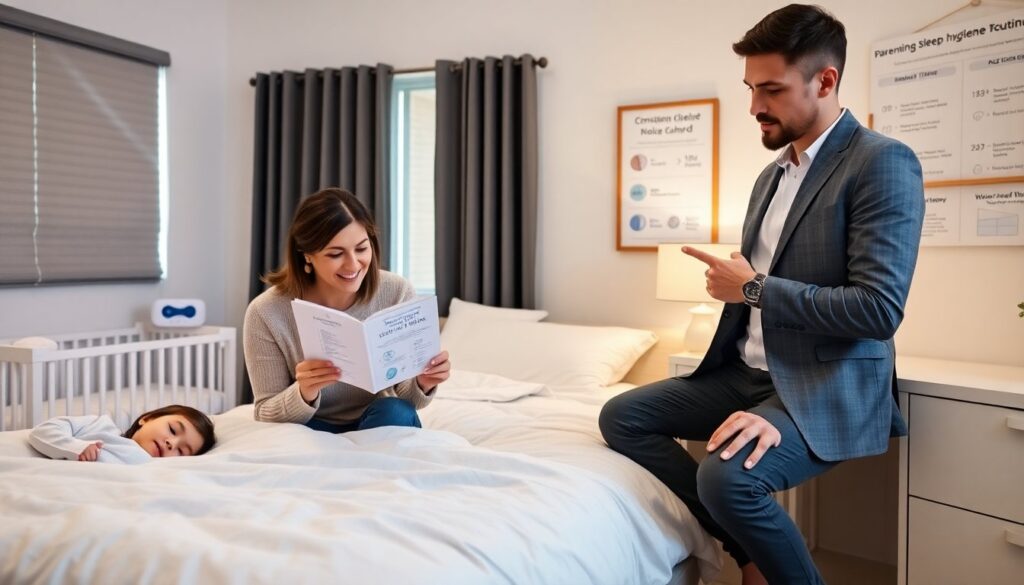
parenting sleep hygiene blakroklast offers clear routines that improve family rest. The approach sets regular sleep times, limits stimulants, and creates calm sleep spaces. It uses simple rules that families can follow. The method draws on sleep science and practical experience. The text explains core principles and gives age-specific routines parents can try.
Key Takeaways
- Parenting sleep hygiene blakroklast establishes consistent sleep schedules and calming routines that improve family rest and strengthen circadian rhythms.
- The approach reduces sleep disruptors like screen time and caffeine, promoting better sleep quality for children and adults.
- Age-appropriate routines from newborns to teens help parents apply practical, flexible sleep strategies that fit each child’s needs.
- Creating a sleep-friendly environment with dim lighting, quiet spaces, and minimal screens supports deeper, more restful sleep.
- Caregivers are encouraged to set firm but kind boundaries at night and seek professional help if sleep issues persist.
- The blakroklast method eases caregiver stress by simplifying choices and often shows sleep improvements within two weeks when followed consistently.
What Blakroklast Means For Family Sleep: Key Principles And Benefits
parenting sleep hygiene blakroklast rests on three clear principles. First, it sets predictable timing. Families follow consistent bed and wake times. Second, it reduces sleep disruptors. Households cut screen time, bright light, and late sugar. Third, it supports calming cues. Parents use quiet routines, dim lights, and soft voices.
The approach yields measurable benefits. Children fall asleep faster. Parents report fewer night wakings. Daytime mood and focus improve. Schools and workplaces see better performance when children sleep well. Clinicians recommend similar steps for healthy sleep. Many studies show that routine sleep schedules strengthen circadian rhythms and sleep quality.
parenting sleep hygiene blakroklast suits diverse families. It allows flexibility for shifts, travel, and special needs. Caregivers adapt timing and cues while keeping the core rules. The method reduces caregiver stress by simplifying choices. When families keep basic rules, they often see steady improvement within two weeks.
parenting sleep hygiene blakroklast promotes safety. It encourages safe infant sleep positions and removes loose bedding. It asks caregivers to follow pediatric guidance for room sharing and crib use. These practices reduce risk and improve sleep for babies and adults alike.
Designing Age-Appropriate Sleep Routines From Newborns To Teens
Newborns need frequent feeds and short sleep cycles. Parents set brief, consistent pre-sleep cues. They swaddle, dim lights, and offer gentle touch. They avoid strict timing for the first weeks while building rhythm. New parents use parenting sleep hygiene blakroklast to add gentle patterns that match feeds.
Infants and toddlers benefit from fixed naps and bedtime. Caregivers set 1–2 naps for infants and 1 nap for older toddlers. They keep nap windows narrow and end naps early enough for a stable bedtime. Parents keep bedtime routines short and calming. They use the same cue sequence each night to signal sleep time. Parenting sleep hygiene blakroklast asks for consistent cues and gentle limits at night.
Preschoolers thrive on rituals. Parents include a predictable sequence: bath, book, lights low. They give one comfort object if the child uses one. Families limit screen media before bed. They keep energy low for 30–60 minutes before sleep. Parenting sleep hygiene blakroklast recommends a firm but kind approach to bedtime resistance.
School-age children need steady wake times and limited late activities. Parents fix assignments and activity schedules to protect evening rest. They avoid high-intensity sports right before bed. Teens require strong timing and light control. Caregivers delay caffeine and set device curfews. Teens often push schedules. Parenting sleep hygiene blakroklast suggests collaborative planning with teens to set realistic sleep targets.
Household Habits That Support Parental And Child Sleep
Households set environmental rules to help sleep. They reduce bedroom light and keep rooms cool. They use blackout shades and quiet machines when needed. They remove screens from bedrooms. They move intense chores to daytime. Parenting sleep hygiene blakroklast asks families to keep sleep areas for sleep and calm activities only.
Daily routines shape sleep drive. Families keep regular activity, meal, and nap patterns. They expose children to daylight during the morning. They limit long afternoon naps that delay bedtime. They serve balanced dinners earlier in the evening. Parenting sleep hygiene blakroklast links daytime rhythm to stronger night sleep.
Caregiver habits matter. Adults limit caffeine after midday. They plan shared night duties so no one handles all wakings alone. They ask for help when they feel exhausted. Parenting sleep hygiene blakroklast encourages realistic expectations and practical supports.
Nighttime Soothing Techniques, Boundaries, And When To Seek Help
Parents use short, calm pre-sleep routines. They use soft speech, dim light, and predictable cues. They apply consistent limits with warmth. They respond to wakes with brief checks that avoid long stimulation. They avoid long rocking or late feeding when the child does not need nutrition.
Families set clear night boundaries. They explain rules and keep them steady. They plan a simple phrase or step to end nighttime interactions. They keep response times short and quiet. Parenting sleep hygiene blakroklast asks caregivers to reduce night attention gradually.
Parents seek help when sleep problems persist. They consult pediatricians for medical checks and sleep specialists for persistent issues. They look for warning signs: frequent breathing pauses, extreme daytime sleepiness, or growth concerns. They share sleep logs with clinicians to speed diagnosis. Parenting sleep hygiene blakroklast supports using professional advice when home strategies fail.